For the last few years, foundation models gave software a new interaction: you typed a prompt, the model replied, and you still did the real work of choosing what to keep, where to paste it, and how to act on it. The intelligence was there, and the interface left most of the effort with the user, which is the part now changing as intelligence becomes part of the user experience itself.
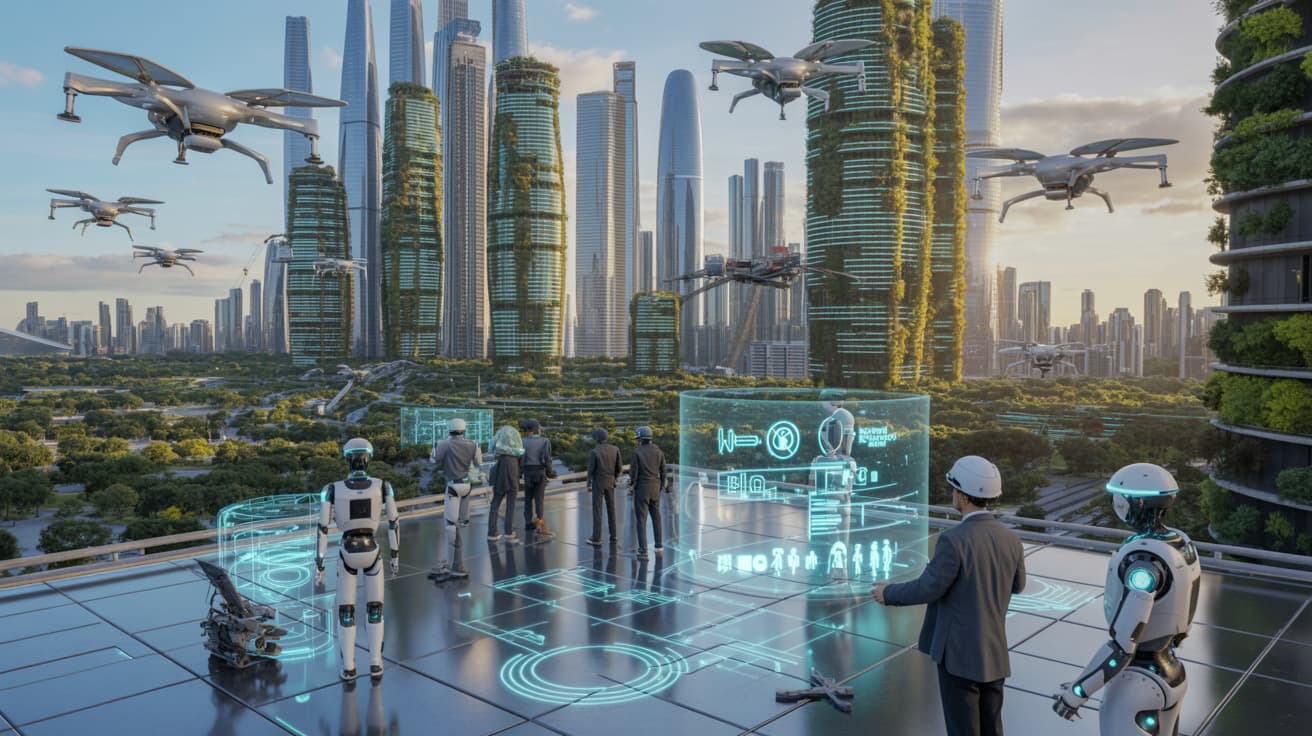
Models are already good enough for a wide range of real problems, so the constraint has moved from what the model knows to what the system lets you do with that knowledge. In Why I'm Bullish on 2026 I described AI becoming foundational infrastructure, and the interface is where that shows up first.
AI is moving from reactive text generation toward systems that hold context, plan, decide, and execute, much like the range of help people give each other, where the lowest form points out that something is wrong and the highest notices the problem, understands it, and fixes it while keeping everyone informed.
In psychology, agency is the ability to initiate, choose, and shape outcomes instead of reacting to them, and AI interfaces are heading toward that kind of collaborator, which is changing what those interfaces look like.
From prompts to intent
The first wave of AI products was built around prompts, where you asked and the model answered. Tools and actions came next, letting the system call APIs, search, or write code, and the initiative still stayed with the human.
Prompting was a temporary interface, the fastest way to expose a powerful model, and it put the whole cognitive load on the user, who had to know what to ask, how to phrase it, and how to break the problem into steps.
The next generation is built around intent. You express a goal instead of every step, and the system works out the plan, tracks state, and executes. Once a system can maintain state, observe context, and run multi-step workflows, it can anticipate instead of waiting for instructions, and software starts to feel like an assistant instead of a form.
A marketing agent could monitor campaigns, identify underperforming ads, pause them, and reallocate budget without being asked, and a coding agent could watch a codebase, notice failing tests, investigate the cause, and propose a fix before you see the error. Both work from intent and act on it, where a chatbot waits for a prompt.
Voice accelerates the shift, turning the car, the phone, and the home into surfaces for intelligence where you speak a need instead of typing a command, and sometimes the system infers intent from patterns and environment without either.
Power users will go further and train their agents with preferences, goals, principles, and constraints so the system can decide on their behalf. Over time those agents become personalized operators that know how you trade off speed against quality, risk against reward, and privacy against convenience, which means you delegate judgment along with tasks and the distance between a problem and its result shrinks.
Agents matter because they are allowed to remember, plan, and act, which turns intelligence into something you can use.
From answers to outcomes
A chatbot gives you an answer that a person still has to turn into action, while an agent gives you an outcome that already sits inside a workflow. When an AI system can read your data, apply rules, call APIs, make decisions, and update state, it becomes infrastructure, and the productivity gain comes from a tighter loop between thinking and doing rather than from better text.
Interfaces as the bottleneck
Once models are good enough, the limit is how their intelligence is exposed. The best AI tools today are the ones with the best flows rather than the largest models, where context persists, tasks are visible, progress is tracked, and humans and machines share one workspace, so in 2026 the user experience is the product.
Designing high-agency AI
Good AI UX comes down to trust, visibility, and control: you need to know what the agent is doing, why, and when you can override it, or proactive behavior feels like a loss of control instead of help.
The biggest mistake people make about agents is picturing them as autonomous beings, when they are closer to powerful macros that chain steps, maintain memory, call tools, and react to changes. That is software architecture catching up to model capability, and seeing agents that way makes the design work clearer, because what a product needs is a well-designed system that moves through work the way a human assistant would, and no general superintelligence is required for it.
What changes for teams building AI products
Models are good enough, tooling is becoming composable, and interfaces are being rebuilt around workflows instead of chat, and together those conditions turn AI from a feature into a foundation. For founders and designers the advantage moves from having the best model to building the best workflows, and for users AI starts to feel like a collaborator instead of a tool. When I design an AI feature now, I start from the workflow it completes and the controls the user needs over it, and pick the model last.